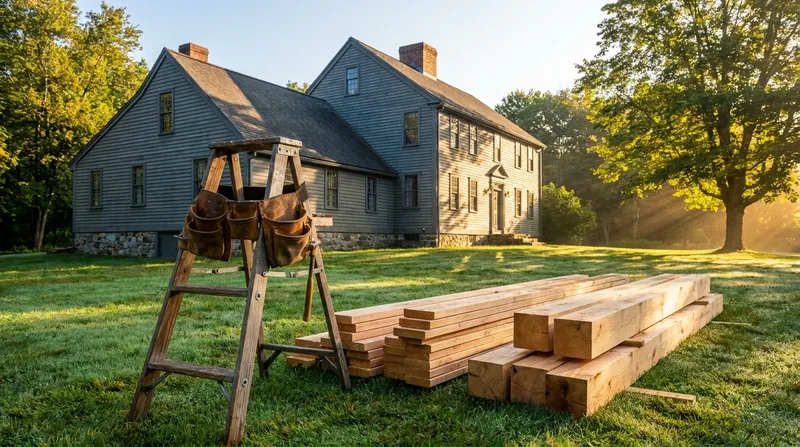
How to Start a Landscaping Business in Massachusetts
How to Start a Landscaping Business in Massachusetts
Starting a landscaping business in Massachusetts gives you the opportunity to build a profitable service-based enterprise in a state with strong demand for outdoor maintenance and design work. However, launching a landscaping company requires careful planning around business structure, licensing, insurance, and regulatory compliance. This guide walks you through the exact steps to get your landscaping business registered, permitted, and operational in Massachusetts.
Step 1: Choose Your Business Structure
Before you file any paperwork, decide how you will structure your landscaping business. Massachusetts allows three main options: sole proprietorship, limited liability company (LLC), or corporation.
Sole Proprietorship
This is the simplest option. You operate under your own name or a business name (called a "doing business as" or DBA). You do not file formation documents with the Secretary of the Commonwealth, but you must register a business certificate with the clerk of each city or town where you have an office. Boston charges $65 for a business certificate, with an additional $35 fee for non-residents. The certificate is valid for four years and must be renewed every four years. A sole proprietorship is the fastest to start, but you are personally liable for all business debts and lawsuits.
Limited Liability Company (LLC)
An LLC provides liability protection, meaning your personal assets are generally protected if the business is sued. To form an LLC in Massachusetts, file a Certificate of Organization with the Massachusetts Secretary of the Commonwealth, Corporations Division. The filing fee is $520. You must include the words "limited liability company" or "limited company" or the abbreviation L.L.C., L.C., LLC, or LC in your business name. You also need to appoint a resident agent (an individual resident of Massachusetts, a domestic corporation, or a foreign corporation authorized to do business in the state) who has an office in Massachusetts. Electronic and fax filings carry an expedite charge of $20 and are processed ahead of mail filings. The Corporations Division does not publish a standard processing timeline, but documents are accepted Monday through Friday, 8:45 a.m. to 4:00 p.m.
An LLC must file an annual report every year on or before the anniversary date of organization. The annual report fee is $500 by mail or $520 if filed electronically (including the $20 expedite fee). This recurring annual cost is the main ongoing state expense for an LLC that does not elect corporate tax treatment.
Corporation
A corporation is a separate legal entity with its own liability protection, but it involves more paperwork and recordkeeping than an LLC. File Articles of Organization with the Secretary of the Commonwealth. The filing fee is $265. You must appoint a registered agent and registered office. Corporations must file an annual report every year. The annual report fee is $100 by mail or $110 if filed electronically (including a $10 expedite fee). The report must arrive at the Corporations Division within two and one-half months after the end of your fiscal year.
For a landscaping business, an LLC is often the best choice because it balances liability protection with simplicity and lower annual costs compared to a corporation.
Step 2: Reserve or Register Your Business Name
If you are forming an LLC or corporation, you can reserve your business name with the Massachusetts Secretary of the Commonwealth before filing your formation documents. A name reservation costs $30 and is valid for 60 days. You can extend it one time for another 60 days by written request. This protects your name while you finalize your business plan.
If you are operating as a sole proprietor or DBA, you do not need to reserve a name with the state, but you must register a business certificate with your local city or town clerk. The fee varies by municipality. You can search for existing business names and corporations on the Secretary of the Commonwealth's website at https://corp.sec.state.ma.us/CorpWeb/CorpSearch/CorpSearch.aspx to make sure your chosen name is not already taken.
Step 3: Obtain Your Massachusetts Landscaping License
Massachusetts requires landscaping professionals to hold appropriate licenses depending on the scope of work. Landscape architects who design landscapes must hold a landscape architecture license, regulated by the Massachusetts Board of Registration of Landscape Architects. However, if you are providing landscaping maintenance, lawn care, garden design without engineering components, or similar services, you may not need a landscape architecture license.
The specific licensing requirement depends on whether your services include structural design, grading plans, or other engineering work. If your work is limited to lawn mowing, planting, mulch installation, pruning, or general maintenance, you typically do not need a professional license, but you should verify with the Massachusetts Board of Registration for Landscape Architects at the state level.
However, if your landscaping business uses certain equipment to lift materials or workers to heights, such as a boom lift or personnel lift, you may need a hoisting license from the Massachusetts Department of Labor Standards. Hoisting license requirements apply if you operate hoists or lifting equipment above certain specifications. You can verify the specific requirements with the department at https://www.mass.gov/orgs/department-of-labor-standards.
Step 4: Register for State and Local Permits
Contact your city or town clerk to determine what local permits and licenses you need. Most municipalities require a local business license or permit in addition to your state-level registration. Some towns may require specific permits for landscaping work, such as tree removal permits or environmental permits if you work near wetlands.
Verify whether you need a stormwater or erosion control permit if your landscaping work involves grading, drainage, or disturbing soil. The Massachusetts Department of Environmental Protection oversees these requirements. Ask your local conservation commission whether your planned work triggers permitting.
Step 5: Obtain Business Insurance
Insurance is essential for a landscaping business. At minimum, you should carry general liability insurance to protect against claims of property damage or bodily injury caused by your work. Most clients, especially residential customers and property management companies, will require proof of insurance.
If you employ workers, you must carry workers' compensation insurance. Massachusetts law requires all employers to carry this coverage. You must register with the Massachusetts Department of Industrial Accidents and obtain a policy from a private insurance carrier or the state fund.
Depending on the scope of your services, you may also want to carry equipment or tools coverage, commercial auto insurance (if you use vehicles for the business), and professional liability insurance.
Step 6: Register for Federal and State Taxes
If you form an LLC or corporation, you must obtain an Employer Identification Number (EIN) from the Internal Revenue Service (IRS), even if you have no employees. You can apply for an EIN for free online at https://www.irs.gov. The EIN is a nine-digit number used to identify your business for tax purposes.
If you operate as a sole proprietor, you can use your Social Security number as your tax identification number, but obtaining an EIN is still recommended.
Register with the Massachusetts Department of Revenue for a sales and use tax number if you sell any taxable goods, such as plants, mulch, or hardscape materials, as part of your business. Massachusetts sales tax is 6.25 percent. You can register online at https://mtc.dor.state.ma.us/mtc/_/.
You must also file federal income tax returns annually. If you form an LLC that does not elect corporate tax treatment, you report business income on your personal tax return. If your LLC elects to be taxed as a corporation, or if you form a corporation, your business must file a separate corporate tax return and pay corporate excise tax. Massachusetts corporate excise is 8.0 percent of net income, plus $2.60 per $1,000 of tangible property or net worth, with a minimum excise of $456.
Step 7: Gather Equipment and Tools
Starting a landscaping business requires essential equipment and tools. The exact items depend on the services you offer, but typical needs include:
- Mowers (push mower, riding mower, or zero-turn mower depending on property sizes)
- String trimmer and edger
- Blower (handheld or backpack)
- Pruning tools (shears, loppers, saws)
- Shovels, rakes, and hand tools
- Wheelbarrow or garden cart
- Landscaping rake and peat moss for grading
- Safety equipment (gloves, safety glasses, hearing protection, steel-toed boots)
- Vehicle for transporting equipment and crew (truck or trailer)
- Fuel, oil, and maintenance supplies
Budget for initial equipment purchases based on the scale of your business. A basic setup might cost $5,000 to $10,000. As you grow and take on larger projects, you can invest in additional or higher-end equipment.
Step 8: Hire and Train Employees (If Applicable)
If you plan to hire employees, you must comply with Massachusetts employment laws. All employers must register with the Massachusetts Department of Industrial Accidents for workers' compensation insurance. You must withhold federal and state income taxes from employee wages and pay payroll taxes to the IRS and Massachusetts Department of Revenue.
Verify that employees are eligible to work in the United States by completing an I-9 form. Maintain accurate payroll records and comply with the Massachusetts minimum wage, which is currently $15 per hour.
Provide a safe work environment. Landscaping involves hazards such as heavy equipment, sharp tools, heat exposure, and pesticide exposure (if you apply treatments). Train employees on safety procedures and provide appropriate protective equipment.
Step 9: Market Your Landscaping Business
Once your business is registered and insured, focus on acquiring customers. Common marketing approaches for landscaping businesses include:
- Develop a professional website and optimize it for local search keywords such as "landscaping near me" and "lawn care in [your town]."
- Join Google Local Services Ads and Google My Business to appear in local search results.
- Ask satisfied customers for online reviews on Google, Yelp, and industry directories.
- Distribute flyers or door hangers in target neighborhoods.
- Network with real estate agents, property managers, and contractors who refer landscaping work.
- Post before-and-after photos of your work on social media (Instagram, Facebook, TikTok).
- Offer seasonal promotions or discounts to first-time customers.
Tips to Avoid Common Mistakes
- Do not skip insurance. One lawsuit can bankrupt an uninsured landscaping business. Invest in comprehensive coverage from day one.
- Verify permit requirements with your town. Landscaping regulations vary by municipality. Call your local clerk or conservation commission before starting work on a new property.
- Keep accurate records. Document all business expenses, invoices, and employee hours. Good recordkeeping makes tax filing easier and protects you if questions arise.
- Clarify scope and pricing upfront. Provide written estimates for every job. Specify what work is included, what is not, and what additional costs might apply, such as travel time, dump fees, or equipment rental.
- Train employees on hoisting equipment. If your team uses lifts, boom lifts, or other hoisting equipment, ensure operators have appropriate licenses and training as required by Massachusetts law.
- Follow environmental rules. Do not dispose of yard waste illegally. Use approved disposal sites or mulching services. Respect wetland buffers and protected areas.
Expected Timeline and Costs
Here is what you can reasonably expect:
- Timeline to launch: 2 to 4 weeks if you file an LLC electronically, 4 to 8 weeks if you mail paperwork. Add time for insurance quotes and local permits.
- State filing costs: $520 for an LLC or $265 for a corporation, plus $30 to reserve a name if desired.
- Equipment startup costs: $5,000 to $15,000 for basic tools and a vehicle.
- Insurance costs: $800 to $2,000 per year for general liability and workers' compensation, depending on the size of your operation.
- Annual state reporting: $500 to $520 per year for LLC annual report filings.
Important Disclaimer
This article provides informational guidance about starting a landscaping business in Massachusetts. It is not legal, tax, or business advice. Business formation laws, tax rules, and licensing requirements can be complex and change over time. Before you file formation documents, obtain an EIN, or make hiring decisions, consult with a qualified attorney, accountant, or tax professional who is familiar with Massachusetts law and your specific business situation. They can advise you on the best structure for your business, help you avoid tax mistakes, and ensure you comply with all applicable regulations.
Resources
- Massachusetts Secretary of the Commonwealth, Corporations Division: https://www.sec.state.ma.us/divisions/corporations/corporations.htm
- Massachusetts Department of Revenue: https://www.mass.gov/orgs/massachusetts-department-of-revenue
- Massachusetts Department of Labor Standards: https://www.mass.gov/orgs/department-of-labor-standards
- Massachusetts Small Business Development Center Network: https://www.msbdc.org/
- U.S. Small Business Administration, Massachusetts District: https://www.sba.gov/district/massachusetts
Keep exploring: related Massachusetts guides
- How to Start a Junk Removal Business in Massachusetts
- How to Start a Laundromat Business in Massachusetts
- How to Start a Cleaning Business in Massachusetts
- How to Start a Lawn Care Business in Massachusetts
- How to Get a Contractor License in Massachusetts
- How to Start an LLC in Massachusetts
- Massachusetts Business License
- How Much Does It Cost to Start a Business in Massachusetts
- All Massachusetts business types
- Every Massachusetts guide in one place