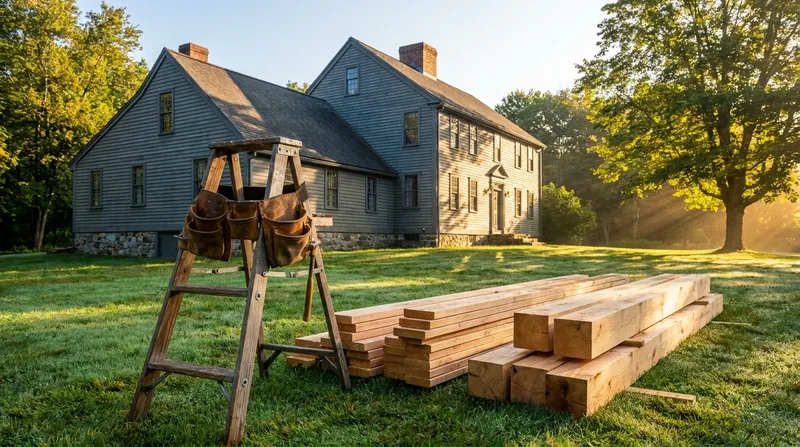
How to Start a Roofing Business in Massachusetts
How to Start a Roofing Business in Massachusetts
Starting a roofing business in Massachusetts requires more than owning a ladder and a hammer. You need the right business structure, a roofing license in Massachusetts (if performing certain work), proper insurance, bonding, and compliance with state and local building codes. This guide walks you through the exact steps and costs to launch a legitimate, profitable roofing company in the commonwealth.
Do You Need a Roofing License in Massachusetts?
The answer depends on the type of roofing work you perform. If you install, repair, or replace roofing on residential properties for payment, Massachusetts requires you to be registered as a home improvement contractor, which includes roofing services.
According to Massachusetts state law (M.G.L. c. 142, sec. 71BB), any person performing home improvement work for $1,000 or more must be registered. Home improvement includes roof repairs, replacement, and installation. There is no separate "roofing license" per se, but roofing falls under home improvement contracting.
However, certain narrow exceptions apply: emergency repairs, work performed by the homeowner on their own property, and work done by the original builder on new construction may not require registration. Verify your specific situation with the local building official in the city or town where you operate.
Step 1: Choose Your Business Structure
Before registering as a home improvement contractor, establish a legal business entity. Roofing contractors typically choose between:
- LLC (Limited Liability Company), Offers liability protection, simpler tax handling, lower filing cost ($520), and ongoing compliance ($500 annual report). Recommended for most small roofing startups.
- S-Corporation, Provides liability protection and potential tax savings on self-employment taxes, but requires more paperwork and accounting (not recommended until you exceed $60,000 in profit).
- Sole Proprietorship, Simplest to start, but offers no liability protection. Your personal assets are at risk if your company is sued.
For roofing, an LLC is the standard choice. You receive personal liability protection (so a roofing injury lawsuit targets the business, not your house) without the complexity of an S-Corporation.
Step 2: Form Your LLC in Massachusetts
To form an LLC, follow these steps:
- Choose and reserve your name. Your LLC name must include "Limited Liability Company," "Limited Company," or an abbreviation (LLC, LC). Check availability at the Massachusetts Secretary of the Commonwealth business search: https://corp.sec.state.ma.us/CorpWeb/CorpSearch/CorpSearch.aspx. Reserve the name for 60 days (extendable to 120 days) for $30.
- Prepare your Certificate of Organization. This is your LLC formation document. Include your business name, address, member names, and resident agent (a person or entity in Massachusetts authorized to receive legal papers on your behalf).
- File with the Secretary of the Commonwealth. Submit your Certificate of Organization to the Corporations Division at https://corp.sec.state.ma.us/corpweb/loginsystem/login_form.aspx (online), by mail, or in person. Filing fee: $520. Processing times vary; electronic filing with a $20 expedite fee is faster than mail.
- Obtain an EIN from the IRS. Apply online at https://www.irs.gov/ein (free). Your EIN is required for hiring employees, opening a business bank account, and tax filings.
Your LLC is officially formed once the Certificate of Organization is accepted by the state. This typically takes 3 to 10 business days (faster with expedite).
Step 3: Register as a Home Improvement Contractor
Once your LLC is formed, you must register with the Massachusetts Office of the Attorney General as a home improvement contractor if you bid or perform roofing work over $1,000. Registration is handled at the local level through the board of selectmen or town clerk in each municipality where you operate.
Registration requirements:
- Application form (available from your town clerk or the Attorney General's office)
- Proof of workers' compensation insurance (see Step 5)
- Proof of general liability insurance (see Step 5)
- Surety bond: Massachusetts typically requires a home improvement surety bond of $5,000 to $10,000 (some towns require more; verify locally). Cost: roughly $500 to $1,000 per year from a surety bonding company.
- Certificate of Good Standing from the Secretary of the Commonwealth (free, issued electronically)
- List of references and prior work (if available)
- Local registration fee: Varies by municipality. Boston charges $65 for residents, $100 for non-residents. Some towns charge $25 to $100.
Once registered, you receive a Home Improvement Contractor Registration Certificate, valid for two years. Renew it before expiration.
Step 4: Obtain Required Permits and Licenses
Building permits: Most residential roofing projects require a building permit from your town's building inspector. Permit costs vary ($50 to $500+, depending on project scope). Apply with your contractor registration and proof of insurance. Inspections will be required during and after work.
Asbestos licensing: If you work on homes built before 1989, you may handle asbestos-containing materials. Massachusetts requires an asbestos contractor license. Contact the Department of Labor's Asbestos Program: https://www.mass.gov/service-details/asbestos-contractor-licensing. Licensing involves training and exam ($200 to $500).
OSHA compliance: Working at heights is hazardous. All roofing employees must receive fall-protection training per OSHA standards. Training courses are available through local trade unions or safety providers ($100 to $300 per employee).
Step 5: Secure Insurance and Bonding
Insurance is not optional, it is mandatory and essential to protect your business.
General liability insurance: Covers bodily injury, property damage, and personal injury claims. Minimum: $1,000,000 per occurrence / $2,000,000 aggregate. Cost: $800 to $2,000 per year (depends on your claims history and coverage area).
Workers' compensation insurance: Mandatory in Massachusetts if you have any employees. Covers medical costs and lost wages for work injuries. Cost: Roughly 5-15% of payroll, depending on roofing classifications and your claims history. Sole proprietors can elect coverage voluntarily (recommended).
Commercial auto insurance: If you use a truck for business, commercial auto coverage is required. Cost: $500 to $1,500 per year.
Surety bond: As mentioned above, home improvement contractors must carry a bond. The bond protects customers if you fail to complete work. Cost: $500 to $1,500 per year for a typical $5,000 to $10,000 bond.
Get quotes from multiple brokers. Bundling these policies often saves 10-20%.
Step 6: Register for Taxes
Register with the Massachusetts Department of Revenue for sales and use tax if you sell materials to customers or bundle labor and materials. If you perform labor-only services, tax registration may not be required, but consult a CPA to be sure.
Sales tax: Massachusetts charges 6.25% on most taxable goods and services. Register online at https://mtc.dor.state.ma.us/mtc/_/
Corporate excise: If your LLC elects corporate treatment, you pay an 8.0% corporate excise on net income plus $2.60 per $1,000 of tangible property, with a minimum of $456 per year. Most roofing LLCs pass income through to members, who pay personal income tax (5.00% flat rate, plus a 4% surtax on income over $1,000,000).
Annual report: File an annual report with the Secretary of the Commonwealth every year by your LLC's anniversary date. Fee: $500. This is required to keep your business in good standing.
Step 7: Set Up Your Business Operations
Business bank account: Open a separate account for your roofing business. Provide your EIN, LLC formation documents, and ID. This keeps personal and business finances separate (critical for liability protection).
Accounting system: Use accounting software (QuickBooks, FreshBooks) or hire a bookkeeper. Track income, expenses, and mileage. Roofing businesses typically deduct equipment, materials, vehicle costs, labor, and insurance.
Contract templates: Develop a written contract for every roofing job. Include scope of work, materials, labor cost, timeline, payment terms, and warranty language. Have a business attorney review your template ($200 to $500 one-time).
Estimate tools: Use software like Xactimate or OnDemand to generate detailed roofing estimates. This looks professional and speeds up the quoting process.
Materials and Equipment You Will Need
Starting a roofing business requires substantial equipment investment:
- Safety equipment: Fall arrest harnesses, lanyards, helmets, safety glasses, work gloves ($1,500 to $3,000)
- Hand tools: Roofing hammer, pry bar, utility knife, nail gun, pneumatic nailer, circular saw ($500 to $1,200)
- Ladders and scaffolding: Extension ladders, roof jacks, scaffolding rental/ownership ($2,000 to $5,000)
- Compressor and hoses: For pneumatic nailers and other tools ($500 to $1,500)
- Roofing materials inventory: Shingles, nails, underlayment, flashing, sealant ($2,000 to $5,000 to start)
- Truck or van: Reliable vehicle for materials and job travel ($15,000 to $30,000 used; commercial financing available)
- Tarps and tarping equipment: For weatherproofing, weather protection ($200 to $500)
Estimated startup cost: $25,000 to $50,000 (excluding truck). Many roofers finance equipment or start with basic tools and add over time.
Common Mistakes Roofing Startups Make
Not registering as a home improvement contractor: Working without registration exposes you to fines ($500 to $1,000+) and liability if something goes wrong. Customers have legal recourse against unregistered contractors.
Skipping insurance or bonding: A single roofing accident, worker injury, customer property damage, or failure to complete a job, can bankrupt an uninsured business. This is not an area to cut corners.
Underpricing work: Many new roofing contractors underbid to land jobs. This erodes profit and creates pressure to cut corners on safety or quality. Research local market rates and bid confidently.
No written contracts: "Verbal agreements" lead to payment disputes and scope creep. Always put terms in writing and have customers sign before work begins.
Mixing personal and business finances: Using your personal account complicates taxes and weakens liability protection. Maintain a separate business bank account.
Hiring workers without proper coverage: Employing unlicensed helpers or skipping workers' compensation is illegal and exposes you to fines and personal liability. All employees must be properly registered and insured.
Timeline and Expected Results
Assuming you work efficiently, you can launch a legitimate roofing business in Massachusetts in 2 to 6 weeks:
- Week 1: Form your LLC ($520, 3-10 days). Apply for EIN (free, immediate).
- Weeks 1-2: Secure insurance and bonding quotes. ($800 to $2,000 upfront; $200 to $500 per month ongoing).
- Week 2-3: Register locally as a home improvement contractor ($25 to $100 per town). Obtain surety bond ($500 to $1,500).
- Week 3-4: Apply for building permits as needed. Complete OSHA or asbestos training if required.
- Weeks 4-6: Set up business bank account, accounting system, and contracts. Arrange financing for equipment and inventory.
Once licensed and insured, you can legally bid and perform roofing work. Most new roofing contractors take 3 to 6 months to land their first paying customers, and 12 to 18 months to build sustainable referral income. Profit margins in residential roofing typically range from 15% to 30%, depending on efficiency and local competition.
Disclaimer
This article is informational only and does not constitute legal, tax, or business advice. Roofing contractor requirements and regulations vary by municipality within Massachusetts. Consult a Massachusetts-licensed attorney, CPA, and local building official to confirm all current requirements for your specific location and type of work. The fees, timelines, and regulations cited are accurate as of the publication date but may change. Verify all current requirements with official state and local agencies before making business decisions.
Resources for Further Information
- Massachusetts Secretary of the Commonwealth: https://www.sec.state.ma.us/divisions/corporations/corporations.htm
- Massachusetts Attorney General (Home Improvement Contractor Info): https://www.mass.gov/ago
- Massachusetts Department of Revenue: https://www.mass.gov/orgs/massachusetts-department-of-revenue
- Asbestos Contractor Licensing: https://www.mass.gov/service-details/asbestos-contractor-licensing
- OSHA Safety Training: https://www.osha.gov/training
- Small Business Development Center Network: https://www.msbdc.org/
- U.S. Small Business Administration (SBA) Massachusetts District: https://www.sba.gov/district/massachusetts
Keep exploring: related Massachusetts guides
- How to Start a Plumbing Business in Massachusetts
- How to Start an Electrician Business in Massachusetts
- How to Start a Handyman Business in Massachusetts
- How to Start an HVAC Business in Massachusetts
- How to Get a Contractor License in Massachusetts
- How to Start an LLC in Massachusetts
- Massachusetts Business License
- How Much Does It Cost to Start a Business in Massachusetts
- All Massachusetts business types
- Every Massachusetts guide in one place