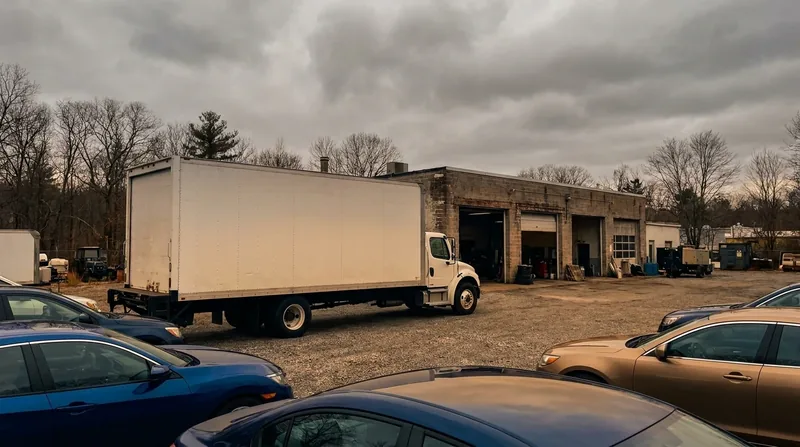
How to Start a Car Rental or Turo Business in Massachusetts
How to Start a Car Rental or Turo Business in Massachusetts
Starting a car rental business or operating as a Turo host in Massachusetts requires you to navigate both general business formation and industry-specific vehicle regulations. Whether you're launching a traditional car rental fleet or listing vehicles on a peer-to-peer platform like Turo, this guide walks you through the exact steps needed to operate legally in Massachusetts.
What You Need Before You Start
Before filing any paperwork, you'll need the following in place:
- Proof of residency or a Massachusetts business address (required for registration)
- A registered agent or resident agent who lives in Massachusetts (required for LLCs and corporations)
- Your legal business name (verified to not conflict with existing registered businesses)
- A federal Employer Identification Number (EIN) from the IRS
- Proof of commercial auto insurance (required before you can legally rent vehicles)
- Vehicle titles and registration documents for any cars you own
- Sufficient capital to cover startup costs, insurance, and vehicle acquisition
Estimate your startup costs conservatively: business formation ($520 to $600), vehicle insurance ($2,000 to $5,000 annually per vehicle, depending on coverage), and at least one vehicle purchase or lease. If operating on Turo, you'll also need the platform fee and their required coverage levels.
Step 1: Choose Your Business Structure
The two main options for a car rental business in Massachusetts are an LLC (Limited Liability Company) or a corporation. Here's the practical difference:
LLC (Limited Liability Company): Most car rental startups choose an LLC because it offers personal liability protection, simpler tax filing, and less paperwork. You pay a $520 formation fee to the Massachusetts Secretary of State, file a Certificate of Organization, and file a $500 annual report every year on your anniversary date. An LLC does not pay a separate franchise tax; income passes through to the owner and is taxed as personal income at the state rate of 5.00 percent plus an additional 4 percent surtax on income above $1,000,000 annually (adjusted yearly for cost of living). If your LLC is profitable, this is typically the most tax-efficient choice.
Corporation: A C corporation or S corporation offers similar liability protection but involves more filing requirements. The formation fee is $265, and you must file an annual report due within two and one half months after your fiscal year ends (or pay a $150 late fee). Corporations pay corporate excise of 8.0 percent of net income taxable in Massachusetts, plus $2.60 per $1,000 of tangible property or net worth, with a minimum excise of $456. For most car rental operations, especially if you're starting small, an LLC is simpler and more cost-effective.
Step 2: Search and Reserve Your Business Name
Your business name must be unique in Massachusetts. Before you file, check whether your name is available by searching the state's business database at the Massachusetts Secretary of State Corporations Division: https://corp.sec.state.ma.us/CorpWeb/CorpSearch/CorpSearch.aspx
If you find an existing business with the same or deceptively similar name, you'll need written consent from that entity to use it. If the name is clear, you can reserve it with the Secretary of State for 60 days (extendable one time for 60 more days) by paying a $30 reservation fee. This prevents anyone else from registering that name while you prepare your formation documents, though it's not required to proceed.
Your business name must also comply with Massachusetts law. For an LLC, the name must contain the words "limited liability company," "limited company," or the abbreviation LLC or LC. For example: "Boston Car Rentals, LLC" or "Blue Ridge Auto Rentals, Limited Liability Company."
Step 3: Appoint a Resident Agent
Massachusetts law requires every LLC and corporation to designate a resident agent (LLCs) or registered agent (corporations) for service of legal process. This person must be:
- An individual resident of Massachusetts, OR
- A domestic corporation, OR
- A foreign corporation authorized to do business in Massachusetts
The resident or registered agent must maintain an office in Massachusetts where your business records are kept. Many small business owners serve as their own resident agent. If you choose to use a professional registered agent service, expect to pay $100 to $300 annually. Your agent must consent to the appointment, and that consent must be filed with your formation documents.
Step 4: File Your Formation Documents
Now you're ready to form your business. File either a Certificate of Organization (for an LLC) or Articles of Organization (for a corporation) with the Massachusetts Secretary of State. You can file online, by fax, or by mail.
Online or fax filing (faster): Use the Corporations Online Filing System at https://corp.sec.state.ma.us/corpweb/loginsystem/login_form.aspx. Fee is $520 for an LLC Certificate of Organization plus a $20 expedite fee ($540 total), or $265 for corporation Articles of Organization plus a $15 expedite fee ($280 total). Electronic filings are processed ahead of mail filings and are typically handled within one business day, though the state does not publish a guaranteed turnaround. Documents are accepted 8:45 a.m. to 4:00 p.m., Monday through Friday.
By mail: Mail your formation documents to the Massachusetts Secretary of the Commonwealth, Corporations Division, One Ashburton Place, Boston, MA 02108. The fee is $520 for an LLC or $265 for a corporation. Processing time is slower (typically 2 to 3 weeks), so if you're in a hurry, electronic filing is worth the extra fee.
Keep a certified copy of your filed formation documents. You'll need them for your EIN application and for opening a business bank account.
Step 5: Obtain Your Federal EIN
An Employer Identification Number (EIN) is your business's federal tax ID. You need one to hire employees, open a business bank account, and file corporate taxes. You can apply for an EIN free of charge at https://www.irs.gov or by calling the IRS at 1-800-829-4933. The application takes about 15 minutes if you apply online, and your EIN is issued immediately. If you mail your application, allow 4 to 5 weeks.
Have your formation documents and Social Security number (or individual tax ID) ready when you apply.
Step 6: File for a Local Business Certificate (If Needed)
Massachusetts has no single statewide general business license. Instead, any business operating under a name other than its owner's true name must file a business certificate (also called a "doing business as" or DBA certificate) with the clerk of every city or town where it has an office. The fee varies by municipality; Boston charges $65 for a resident or $100 for a non-resident, and the certificate is valid for four years. Other towns may charge more or less, so contact your local city or town clerk's office for the exact fee.
For example, if you're opening a car rental operation in Boston under the name "Boston Fleet Auto Rentals, LLC," you'll file a business certificate with the Boston City Clerk. You can find your local clerk's office by searching your town's website or by calling town hall.
Step 7: Register for Sales Tax and Obtain Your Sales Tax Permit
Car rental businesses in Massachusetts must collect sales tax on vehicle rentals. The state sales tax rate is 6.25 percent. Register with the Massachusetts Department of Revenue at https://mtc.dor.state.ma.us/mtc/_/ to obtain your sales tax permit (also called a resale certificate or sales tax registration). This process is free and can be completed online. You'll need your EIN and business formation documents.
Once registered, you'll be responsible for collecting sales tax on each rental and remitting it monthly (or quarterly, depending on your filing frequency) to the state. If you operate a Turo platform, understand that you are the rental operator, so you are responsible for collecting and remitting this tax; Turo does not collect it on your behalf.
Step 8: Obtain Commercial Auto Insurance
This is non-negotiable. You cannot legally operate a car rental business without commercial auto insurance that covers rental liability. Personal auto insurance does not cover a rental operation and will not pay claims if you attempt to use it for business purposes.
Commercial auto rental insurance typically covers:
- General liability (damage to property, injury to third parties)
- Physical damage coverage on your vehicles (collision, theft, weather)
- Uninsured or underinsured motorist protection
- Hired and non-owned auto coverage (if you rent to customers who cause damage)
Contact commercial insurance brokers in your area for quotes. Costs vary based on vehicle type, age, the number of vehicles you own, your location, and your deductibles. Expect to pay $2,000 to $5,000 per vehicle annually, or more in urban areas like Boston. Some insurers specialize in Turo hosts or peer-to-peer car sharing and may offer more favorable rates; compare options before committing.
Important note: If you operate on Turo, the platform provides some host protection coverage, but it is not a substitute for commercial insurance. Turo's coverage is excess (pays only after your insurance limits are exhausted) and may have gaps. You must maintain your own commercial auto rental policy.
Step 9: Acquire and Register Your Vehicles
Purchase or lease the vehicles you intend to rent. Each vehicle must be registered in your business's name with the Massachusetts Registry of Motor Vehicles (RMV). You'll need:
- Proof of purchase or lease agreement
- The vehicle's title (if purchased)
- Proof of commercial auto insurance
- Your EIN or business license
Visit your local RMV office or apply online at https://www.mass.gov/rmv to register each vehicle. Registration fees vary by vehicle value and weight. Plan for at least $100 to $300 per vehicle for registration, title transfer, and taxes, plus any local fees.
Step 10: Understand Turo-Specific Requirements (If Applicable)
If you're operating primarily as a Turo host rather than a traditional car rental company, understand that you are still a rental business operator and must comply with all the above steps. Additionally:
- Turo requires hosts to maintain comprehensive and collision insurance with limits of at least $1,000,000. Verify your commercial policy meets this minimum.
- You are responsible for screening renters, setting rental terms, and enforcing your cancellation policy. Turo provides the platform and dispute resolution, but you manage the business relationship.
- You must report all income from Turo rentals to the IRS and Massachusetts Department of Revenue. Turo issues a Form 1099-K at the end of each tax year if your income exceeds $20,000 and you have 200 or more transactions.
- Local zoning and HOA restrictions may prohibit short-term vehicle rentals in your residential area. Check your lease, mortgage, or HOA bylaws before listing vehicles.
Step 11: File Your First Annual Report
Your business formation doesn't end after filing. Massachusetts requires an annual report every year on or before your anniversary date (the date your formation documents were accepted). The fee is $500 if filed by mail, or $500 plus a $20 expedite fee if filed electronically or by fax. The report includes basic information about your business: name, resident or registered agent, and principal place of business.
File online at the Corporations Online Filing System or by mail to the Secretary of State. If you miss the deadline, the state will assess penalties and may revoke your business authorization. Set a calendar reminder for your anniversary date each year.
Tips and Common Mistakes to Avoid
Don't skip the commercial insurance step. Many startup operators try to operate on personal auto insurance to save money. This is a critical mistake. Your policy will be voided if you attempt to use it for business purposes, leaving you personally liable for any claims.
Understand your sales tax obligation. If you operate on Turo or any rental platform, remember that you are responsible for collecting and remitting sales tax. Platforms do not collect this on your behalf. Failure to remit sales tax can result in audits and penalties.
Don't confuse a Turo profile with business formation. Setting up a Turo account is not the same as registering a business with the state. You must form an LLC or corporation and obtain the proper licenses and insurance, independent of the platform.
Check zoning and HOA restrictions. Some residential areas prohibit business operations or restrict commercial vehicle parking. Confirm you can operate from your intended location before you invest in vehicles.
Maintain clear records. Keep all receipts, insurance documents, and business correspondence organized. You'll need them for tax time and in case of disputes with customers.
Expected Results and Timeline
From start to launch, you can expect the following timeline:
- Name search and reservation: 1 to 2 days
- Formation filing (electronic): 1 to 3 business days
- EIN application (online): immediate
- Local business certificate filing: 1 to 5 business days (varies by municipality)
- Sales tax registration: 1 to 2 business days
- Vehicle acquisition and registration: 1 to 4 weeks (depends on vehicle availability and RMV processing)
- Insurance procurement: 2 to 5 business days (faster if using online brokers)
Total startup time: 4 to 6 weeks if you file electronically and have vehicles ready to purchase. If you mail your formation documents, add 2 to 3 weeks.
The state fees total approximately $1,000 to $1,200 for the first year (formation, annual report, business certificate, and EIN application combined). Your actual startup costs will be much higher when you add vehicle acquisition, insurance, and taxes.
Important Disclaimer
This article is informational only and does not constitute legal or tax advice. Car rental operations involve complex liability, insurance, and tax considerations that vary based on your specific business model, location, and personal circumstances. Before you launch, consult with a Massachusetts business attorney to review your formation documents and operating plan, and speak with a CPA or tax professional who understands car rental business taxation, including sales tax obligations and self-employment tax. The Massachusetts Secretary of State's Corporations Division website at https://www.sec.state.ma.us/divisions/corporations/corporations.htm provides official guidance on business formation, and the Massachusetts Department of Revenue at https://www.mass.gov/orgs/massachusetts-department-of-revenue has resources on tax obligations.
Keep exploring: related Massachusetts guides
- How to Start a Trucking Company in Massachusetts
- How to Start a Courier and Delivery Business in Massachusetts
- How to Start a Towing Business in Massachusetts
- How to Start a Moving Company in Massachusetts
- How to Start an LLC in Massachusetts
- Massachusetts Business License
- How Much Does It Cost to Start a Business in Massachusetts
- All Massachusetts business types
- Every Massachusetts guide in one place