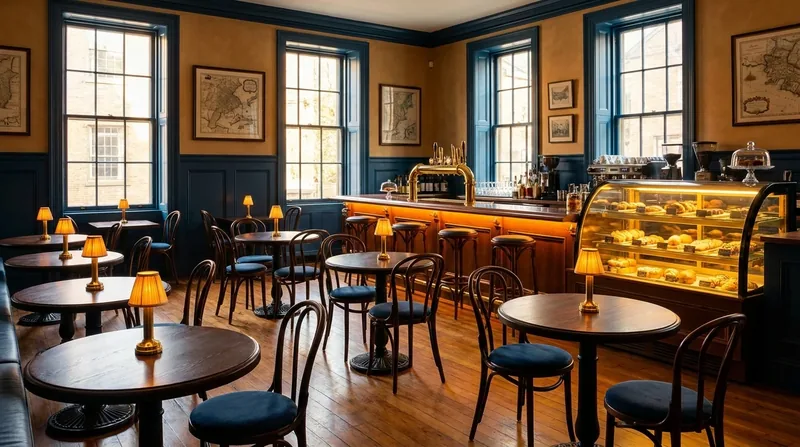
How to Start a Restaurant Business in Massachusetts
How to Start a Restaurant Business in Massachusetts
Opening a restaurant in Massachusetts requires navigating federal food safety rules, state licensing, and local permits. The process takes three to six months from planning to opening day, depending on your location and the complexity of your operation. This guide walks you through each step, focusing on Massachusetts-specific requirements like the Common Victualler's License, health department approval, and local permitting.
Disclaimer: This article is informational and does not constitute legal or tax advice. Restaurant regulations vary by municipality in Massachusetts. Consult with a local attorney and accountant before making business decisions. Contact your local board of health and city/town clerk for the most current requirements in your area.
Step 1: Decide on Your Business Structure
You must choose a legal structure before filing any official paperwork. Your options are a sole proprietorship, a partnership, a limited liability company (LLC), or a corporation. Most restaurant owners choose an LLC because it provides personal liability protection and offers tax flexibility. An LLC in Massachusetts requires filing a Certificate of Organization with the Secretary of the Commonwealth, which costs $520 and typically takes 1 to 2 weeks if filed by mail or electronically.
A corporation costs $265 to file and provides similar liability protection but involves more paperwork and formality. A sole proprietorship requires no state filing fee but offers no liability protection. Discuss this decision with a tax advisor to understand how your choice affects your personal tax burden and liability exposure.
Step 2: Create a Detailed Business Plan
Before you sign a lease or invest capital, write a business plan. Include your restaurant concept, target market, menu, financial projections, staffing plan, and marketing strategy. Banks and investors require this document if you're seeking financing. Your plan should also address how you'll handle food safety, training, and compliance with state and local health codes.
Many restaurants fail because owners underestimate startup costs or overestimate revenue. Research your specific market. Visit competing restaurants, analyze their menus and prices, and talk to local business owners. The Massachusetts Small Business Development Center Network (msbdc.org) offers free consulting to help you refine your plan.
Step 3: Secure Funding and Startup Capital
Restaurant startups typically require $200,000 to $500,000 or more, depending on size, location, and concept. Budget for equipment, build-out, permits, licenses, initial inventory, working capital, and at least three months of operating costs before you're profitable. Common funding sources include personal savings, bank loans, investors, and SBA-backed loans.
The U.S. Small Business Administration has a district office in Massachusetts (sba.gov/district/massachusetts) that can connect you with lenders and provide guidance on SBA loan programs. Keep all receipts and financial records from the start. The IRS requires documentation, and your accountant will need it for tax filings.
Step 4: Find and Secure Your Location
Location is one of the most critical decisions. Look for buildings that already have or can easily accommodate a commercial kitchen, adequate parking, and visibility. Check zoning restrictions. Not all municipalities allow restaurants in all zones. Call your city or town's planning department before committing to a location.
Negotiate a favorable lease that allows for buildout time. Most landlords will require proof of licenses and permits before allowing you to open. Budget several weeks for construction and equipment installation after you sign the lease. If your building requires structural changes, apply for building permits from your municipality's building department before you start work.
Step 5: Register Your Business Name
Choose a name and verify it's available. Go to the Massachusetts Secretary of the Commonwealth's business search portal at corp.sec.state.ma.us/CorpWeb/CorpSearch/CorpSearch.aspx to check if the name is already in use. You can reserve a name for 60 days (extendable to 120 days) for a $30 fee.
If you operate under a name different from your legal business name, you must also register a business certificate with your city or town clerk. Filing fees vary by municipality. Boston charges $65 for residents and $100 for non-residents, and the certificate is valid for four years.
Step 6: Obtain Your Employer Identification Number (EIN)
Apply for an EIN from the IRS even if you're a sole proprietor. This number is required for hiring employees, opening a business bank account, and filing federal taxes. Apply online at irs.gov (search for "Apply for EIN"). The process is free and takes about 15 minutes. You'll receive your number immediately.
Step 7: Register for Massachusetts Sales and Use Tax
Massachusetts charges 6.25 percent sales tax. You must register for a sales and use tax account if you sell prepared food. Register online at mtc.dor.state.ma.us/mtc/_/ through the Massachusetts Department of Revenue. There is no registration fee. You'll receive a certificate and must collect sales tax on applicable food sales, then remit it monthly or quarterly depending on your volume.
Step 8: Get Your Common Victualler's License
This is the most important permit for any food establishment in Massachusetts. A Common Victualler's License authorizes you to prepare and serve food to the public. The license is issued at the local level by your city or town's board of health, not by the state.
Before you apply, your kitchen must pass a health inspection. Contact your local board of health and request an inspection. They will verify that your kitchen layout, equipment, plumbing, ventilation, and food storage meet the Massachusetts State Sanitary Code. Typical items they check include proper handwashing stations, sanitizer dispensers, three-compartment sinks, refrigeration capacity, and adequate floor, wall, and ceiling materials.
Once your kitchen passes inspection, submit your license application to the board of health. Include a copy of the inspection report, your menu, proof of food manager certification (see Step 9), your lease or deed, and proof of liability insurance. Fees vary by town but typically range from $150 to $500 for the initial license. Processing takes 2 to 4 weeks. The license must be renewed annually, usually for a lower fee ($100 to $300).
Step 9: Obtain Food Service Manager Certification
Massachusetts requires at least one certified food protection manager on duty whenever the facility is open. You or a designated manager must complete an approved food safety course and pass an exam. The course is typically four to eight hours and covers topics like temperature control, cross-contamination prevention, personal hygiene, and pest control.
Several vendors offer these courses online and in-person throughout Massachusetts. Examples include ServSafe and courses offered by local health departments. The cost is usually $100 to $150 per person. Certification is valid for five years. Keep your certificate on file; the health inspector will ask to see it during inspections.
Step 10: Apply for a Liquor License (If Applicable)
If you plan to serve alcohol, you need a license from the state's Alcoholic Beverages Control Commission (abcc.mass.gov) and local approval from your city or town's licensing board. This is a lengthy process that can take two to four months or longer.
Start early. Contact your local licensing board for an application and requirements. Most municipalities require a public hearing. You'll need to demonstrate that the business won't harm the neighborhood, that you have a manager trained in responsible alcohol service, and that you meet specific operational requirements.
The cost varies widely by municipality and license type. A full liquor license (beer, wine, and spirits) typically costs $500 to $2,000 for the initial license, plus an annual renewal fee. Some towns limit the number of licenses, making them difficult to obtain. Confirm availability before signing your lease.
Step 11: Arrange Business Insurance
You need several types of insurance to operate legally and protect your business. General liability insurance covers bodily injury or property damage claims. Workers' compensation insurance is required if you have employees. Property insurance covers your building, equipment, and inventory. Liquor liability insurance is mandatory if you serve alcohol.
Restaurants are high-risk businesses, so insurance costs are typically higher than for other businesses. Expect to spend $2,000 to $5,000 or more per year depending on your restaurant's size, location, and type of service. Get quotes from multiple insurers and ask about discounts for safety certifications or risk-management programs.
Step 12: Complete Employment and Payroll Setup
If you're hiring employees, register for state and federal payroll taxes. Register with the Massachusetts Department of Revenue for unemployment insurance at mass.gov/dor. File Form SS-4 with the IRS (or use your EIN if you already have one). Set up a payroll system to track hours, calculate taxes, and file required reports.
Comply with Massachusetts wage and hour laws, which include minimum wage (currently $15.00 per hour as of 2024, subject to increase), overtime requirements, and break rules. Massachusetts requires 10 percent tips to be distributed to non-management staff if tips are pooled. Consult with an HR consultant or employment attorney to understand your obligations.
Step 13: Conduct Final Inspections and Get Operating Approval
Before you open, expect multiple final inspections. Your local board of health will conduct a final sanitation inspection. The building department will verify that your build-out and equipment meet code. The fire marshal may inspect your emergency exits, fire extinguishers, and alarm systems. Some municipalities also inspect for ADA (Americans with Disabilities Act) compliance.
Plan for at least two weeks of inspection scheduling and potential corrections. Common issues include inadequate hot water temperature, missing handwashing signs, improper food storage labeling, or fire code violations. Address any deficiencies immediately and request re-inspection if needed.
Materials and Documentation You'll Need
- Personal identification (driver's license, passport) for all owners
- Social Security numbers or EINs for all owners
- Proof of residency or business address
- Financial statements or bank statements showing startup capital
- Copies of all lease agreements or property deeds
- Business plan and financial projections
- Menu and recipes (for health department review)
- Food safety certifications (manager and staff)
- Proof of insurance (general liability, workers' compensation, property)
- Building permits and construction permits
- Inspection reports from your board of health
- Kitchen equipment specifications and manuals
Timeline and Costs Summary
The entire process typically takes three to six months. Here's a rough timeline:
- Month 1: Business structure, business plan, location, initial permitting inquiries
- Month 2: Kitchen build-out and equipment installation, health department inspections
- Month 3: License applications, manager certifications, liquor license application (if needed)
- Month 4 to 5: Final inspections, staff hiring and training, soft opening
- Month 6: Grand opening
Initial licensing and permit costs typically range from $1,000 to $3,000, not including build-out, equipment, or initial inventory. Add thousands more if you're applying for a liquor license or if your location requires significant renovation.
Tips for Success
Start with your board of health. Call them before you sign a lease. They'll tell you if the building is viable and what health code compliance will require. This conversation could save you tens of thousands of dollars.
Plan for contingencies. Inspections sometimes fail. Equipment orders get delayed. Build extra time and budget into your timeline. A soft opening (invite-only service while you refine operations) can help identify problems before your public launch.
Hire experienced staff early. Your chef, kitchen manager, and front-of-house manager should understand food safety and local regulations. Their knowledge will prevent costly mistakes.
Document everything. Keep copies of all permits, licenses, inspection reports, and correspondence with government agencies. You'll need these for loan applications, annual renewals, and if any disputes arise.
Network with other restaurant owners. They can point you to reliable contractors, inspectors, and suppliers. Many will share their experiences with specific municipalities and permitting challenges.
Common Mistakes to Avoid
Do not sign a lease before confirming zoning approval and health department feasibility. Do not skip the food manager certification or assume you can hire someone to get it later. Do not open before all final inspections pass, even if you think you're "almost ready." Operating without required licenses can result in fines of $100 to $500 per day and even closure.
Do not neglect insurance or assume your landlord's insurance covers your business. It does not. Do not underestimate the complexity of a liquor license application if that's part of your plan. Do not hire employees "off the books" or misclassify them as independent contractors to save money. The state's wage enforcement division and the IRS actively investigate restaurants, and penalties are steep.
Expected Timeline and Results
If you follow these steps and your local municipality processes permits smoothly, you can expect to open within four to six months. However, timelines vary significantly. Municipalities in rural areas may process permits faster, while popular urban neighborhoods (like Boston or Cambridge) can take longer due to higher demand for licenses and more complex approval processes.
Once you've completed all steps and opened your doors, plan for ongoing compliance. Renew your Common Victualler's License annually, maintain food manager certification, keep your insurance current, and stay compliant with wage and tax laws. Massachusetts health inspectors conduct announced and unannounced inspections. Staying prepared prevents costly violations and protects your customers' safety.
For additional guidance, contact the Massachusetts Small Business Development Center (msbdc.org), your local chamber of commerce, or the SBA's Massachusetts district office (sba.gov/district/massachusetts). These resources offer free or low-cost consulting to help you launch and grow your restaurant.
Keep exploring: related Massachusetts guides
- How to Start a Food Truck Business in Massachusetts
- How to Start a Vending Machine Business in Massachusetts
- How to Sell Food From Home in Massachusetts
- How to Start an Ice Cream Shop in Massachusetts
- How to Start an LLC in Massachusetts
- Massachusetts Business License
- How Much Does It Cost to Start a Business in Massachusetts
- All Massachusetts business types
- Every Massachusetts guide in one place