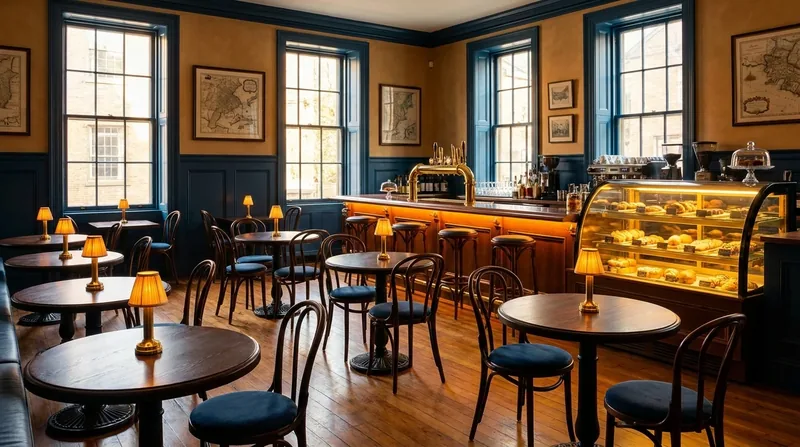
How to Start an Ice Cream Shop in Massachusetts
How to Start an Ice Cream Shop in Massachusetts
Starting an ice cream shop business in Massachusetts requires more than a good product and a location. You need to navigate licensing requirements, health code compliance, and proper business formation to operate legally. This guide walks you through each step, from initial planning through your first day of business.
Choose Your Business Model
Before you file any paperwork, decide whether you want a brick-and-mortar ice cream shop or an ice cream truck operation. Each has different licensing requirements and startup costs.
A traditional ice cream shop serves customers from a fixed location, offering seating, multiple product lines, and year-round operation (though some locations close seasonally). An ice cream truck operates mobile, moving between neighborhoods and events. Both require Massachusetts health permits, but the truck model involves additional street vending and parking regulations that vary by city and town.
For this guide, we focus primarily on the brick-and-mortar model, but note key truck requirements where they differ.
Step 1: Research Massachusetts Food Service and Licensing Requirements
Massachusetts requires food service establishments to obtain licenses from the local board of health in the city or town where you operate. This is your first research step, not your first filing.
Contact the health department in your target location. They will provide requirements specific to your town, including:
- Food establishment license fees and renewal schedules
- Facility inspection requirements and health code standards
- Training and certification requirements for food handlers
- Specific rules for ice cream preparation, storage, and serving
- Parking, signage, and operational hour restrictions
If you are considering an ice cream truck, also check whether your municipality allows mobile food service vendors. Some towns require special permits or restrict where trucks can operate.
Step 2: Select and Secure Your Location
Your location determines which health board has jurisdiction and what local zoning rules apply. Contact your city or town's planning and zoning board to confirm that a food service business is permitted in your chosen area.
Many municipalities have minimum setback requirements from residential areas and schools. Some require conditional use permits or special approvals for food establishments. Securing your location early helps you plan accurate startup costs and timelines.
Lease or purchase the space only after confirming zoning approval and obtaining pre-operational feedback from the health department about the facility's suitability.
Step 3: Design and Prepare Your Facility
Massachusetts health code strictly regulates food preparation and storage spaces. Your facility must meet these standards before you can obtain a license.
Required elements for an ice cream shop include:
- Separate handwashing sink (not connected to food prep sinks)
- Properly sized and functioning refrigeration for ice cream, mix-ins, and perishable toppings
- Commercial-grade freezers to maintain proper temperatures (typically 0°F or below for ice cream)
- Food storage areas with pest control measures and proper shelving
- Grease trap and wastewater system (if you prepare sauces or hot toppings)
- Flooring, walls, and ceilings that can be easily cleaned and sanitized
- Adequate lighting and ventilation
- Separate entrance if employee facilities are inside the customer area
Work with your health department during design to avoid costly rework. Many departments offer pre-opening consultations to identify compliance issues before construction.
Step 4: Establish Your Business Legal Structure
Choose whether to operate as a sole proprietorship, partnership, limited liability company (LLC), or corporation. Each structure has different tax and liability implications.
For most first-time ice cream shop owners, an LLC provides a balance: it limits your personal liability if someone is injured at your business, and it is relatively simple to set up. You would file a Certificate of Organization with the Massachusetts Secretary of the Commonwealth, which costs $520. The state does not charge a separate franchise tax for LLCs; your recurring state cost is the $500 annual report due each year on or before the anniversary of your organization.
If you choose a corporation, the filing fee is $265, and the annual report fee is $100 (or $110 if filed electronically). Corporations pay the state corporate excise of 8.0 percent of net income, plus $2.60 per $1,000 of tangible property or net worth, with a minimum of $456 annually.
A sole proprietorship has no state filing fee, but offers no personal liability protection. A partnership requires a partnership agreement but no state filing unless you use a business name other than the partners' names (in which case you file a business certificate with your town clerk).
This is informational content only, not legal advice. Consult a Massachusetts attorney or CPA to choose the structure that best fits your situation and risk tolerance.
Step 5: File Your Business Certificate (If Using a Trade Name)
If you operate under a name other than your own (for example, "Maria's Ice Cream" instead of "Maria Rodriguez"), you must file a business certificate with the clerk of every city and town where you have an office.
This is not done with the state. Instead, you file locally. The fee varies by municipality; Boston charges $65 for residents ($100 for non-residents), and the certificate is valid for four years. After that, you must renew it.
File this before you open so that your business name is officially recorded and your customers can find you in local records.
Step 6: Obtain Your Employer Identification Number (EIN)
Whether you operate as a sole proprietor, partnership, LLC, or corporation, you need a federal Employer Identification Number (EIN) if you plan to hire employees. Even if you start as the only employee, getting an EIN early simplifies payroll setup later.
Apply for a free EIN from the Internal Revenue Service at irs.gov. You can apply online and receive your number immediately. You will need your Social Security Number and your business legal name and address.
Step 7: Register for Massachusetts Sales Tax
Massachusetts sales tax is 6.25 percent. You must register with the Department of Revenue before you sell your first cup of ice cream.
Register online at the Department of Revenue's online portal: https://mtc.dor.state.ma.us/mtc/. You will collect sales tax from customers and remit it to the state on a schedule (usually monthly or quarterly depending on your sales volume). Failure to register or remit sales tax can result in penalties, so do not skip this step.
Step 8: Obtain Your Food Service License
This is the critical license that allows you to legally operate. After your facility meets health code standards, submit an application to your local board of health. This application typically includes:
- Completed food service license application form
- Floor plan of your facility showing all food prep and storage areas
- Proof that you have the required handwashing and sanitation facilities
- Documentation of your refrigeration capacity
- Proof of food source (supplier information)
- Manager food safety certification (required in Massachusetts)
Your local board of health will schedule an inspection. During inspection, they verify that your facility meets state and local health code. Do not open until you receive your license.
The license is typically valid for one year and must be renewed annually. Renewal usually costs $100 to $300 depending on your municipality and gross annual food sales.
Step 9: Obtain a Food Handler's Permit and Manager Certification
Massachusetts requires that at least one person working in your shop (typically the manager or owner) have a Food Manager Certification from an accredited course. This certification demonstrates knowledge of safe food handling practices, including proper temperature control and sanitation.
Take a course through an approved provider (search for "Massachusetts Food Manager Certification" online). The course takes a few hours and costs around $50 to $150. After passing the exam, you receive your certification, which is required to apply for your food service license.
All other employees must complete a basic food handler training as part of your onboarding. Some employers use online courses; others conduct in-house training. The investment is small compared to the cost of a health code violation.
Step 10: Source Equipment and Supplies
You need commercial-grade equipment, not residential machines. Key equipment for an ice cream shop includes:
- Commercial freezer cases for displaying pre-made ice cream (maintain 0°F or below)
- Walk-in freezer or multiple reach-in freezers, depending on inventory volume
- Commercial refrigerator for toppings, mix-ins, and dairy ingredients
- Ice cream scoops, spoons, and serving utensils (commercial grade, easy to sanitize)
- Cups, cones, napkins, and serving supplies
- Cleaning and sanitation supplies (approved for food contact surfaces)
- Point-of-sale system (cash register or tablet-based)
- Commercial sink with three compartments for manual dishwashing, or a commercial dishwasher
Budget $5,000 to $15,000 for used or basic new equipment, depending on your shop size and whether you make ice cream on-site or purchase pre-made. If you plan to make ice cream from scratch, add an ice cream batch freezer and pasteurization equipment.
Purchase from restaurant supply companies like WebstaurantStore, Sam's Club for Business, or local food service suppliers. Buy commercial-grade equipment that meets NSF (National Sanitation Foundation) standards; this ensures it meets health code and is designed for easy cleaning.
Step 11: Establish Your Ice Cream Sources
You can either purchase pre-made ice cream from a wholesale distributor or make it fresh in your shop. Both approaches require health department approval of your supplier.
If purchasing wholesale, your supplier must be a licensed food manufacturer. Provide the health department with supplier information during your license application. If making ice cream on-site, your process must meet pasteurization standards, which requires specific equipment and documented procedures.
Keep detailed records of all ingredients, suppliers, and expiration dates. Massachusetts health code requires you to track where every ingredient comes from. This "farm-to-table" traceability helps identify contamination sources if a customer becomes ill.
Step 12: Set Up Payroll and Insurance
If you hire employees, you must set up payroll, file quarterly tax returns, and maintain workers' compensation insurance. Open a business bank account with your EIN to keep business and personal finances separate. This simplifies tax filing and protects your liability shield if you formed an LLC.
Obtain general liability insurance (covers if a customer is injured at your shop) and product liability insurance (covers if someone gets sick from your ice cream). These typically cost $500 to $2,000 per year depending on your location and sales volume. Some landlords require specific insurance minimums before you can lease the space.
Step 13: Plan Your Opening
You cannot open to the public until you have your food service license. Plan to close during the inspection and any remediation period if items are flagged. Expect the process from facility completion to license approval to take 2 to 8 weeks depending on your health board's workload.
On opening day, have your manager certification and food handler permits posted in your shop. Keep all licenses, inspection reports, and health department communications available for review. Set up your point-of-sale system to calculate and record sales tax by category.
Common Mistakes to Avoid
- Skipping the pre-opening health consultation. Contact your health board before you build. A ten-minute conversation can prevent a $5,000 renovation.
- Assuming residential freezers are sufficient. Ice cream must be stored at 0°F or below. Residential freezers typically run at 0 to 10°F and are not designed for commercial use.
- Hiring staff before obtaining your license. You cannot legally operate, so your staff cannot legally work. Delay hiring until your license is approved.
- Not registering for sales tax. Operating without a sales tax license is illegal, even if you "plan to get it soon." Register before your first sale.
- Buying equipment from residential retailers. Residential ice cream makers do not meet health code. Buy commercial equipment from restaurant supply companies.
- Underestimating startup costs. Factor in lease, renovations, equipment, permits, insurance, and working capital. Most food businesses need $20,000 to $50,000 to open.
- Failing to renew licenses on time. Set calendar reminders for your annual health license renewal and sales tax filing deadlines. Missing deadlines results in penalties and potential closure.
Expected Results and Timeline
If you follow these steps systematically, you can realistically expect to open within 3 to 6 months from the time you secure your location. The timeline depends on your health board's responsiveness, how quickly you can complete facility improvements, and your team's ability to manage multiple applications simultaneously.
Your first-year operating costs (beyond buildout and equipment) typically include state annual report or corporate filing (up to $110), annual health license renewal ($100 to $300), food handler training ($50 to $150 per employee), liability insurance ($500 to $2,000), and quarterly sales tax filing (amount varies with sales). These ongoing costs mean you need to carefully forecast sales revenue and manage your margins.
Staffing and product costs will be your largest expense categories. Plan your product mix and pricing carefully. Many ice cream shops operate on margins of 60 to 80 percent on ice cream and toppings, but after factoring in labor, rent, and utilities, net profit is typically 5 to 15 percent of revenue in the first few years.
Your success depends not only on licensing compliance, but also on product quality, customer service, and location. A convenient location with good foot traffic and strong online reviews drives repeat business far more than a cheap location with difficulty finding you online.
Disclaimer
This article provides informational guidance on starting an ice cream shop in Massachusetts. It is not legal advice, tax advice, or a substitute for consulting qualified professionals. Health code requirements, licensing fees, and municipal regulations change and vary by location. Before making any business decisions, consult with a Massachusetts attorney about your business structure, a CPA about your tax obligations, and your local board of health about specific facility and licensing requirements for your shop.
The information in this guide reflects Massachusetts state law and general municipal requirements as of October 2026. Always verify current requirements with your local health board and the Massachusetts Department of Revenue before you begin.
Keep exploring: related Massachusetts guides
- How to Start a Vending Machine Business in Massachusetts
- How to Start a Bakery Business in Massachusetts
- How to Start a Restaurant Business in Massachusetts
- How to Start a Bar or Brewery in Massachusetts
- How to Start an LLC in Massachusetts
- Massachusetts Business License
- How Much Does It Cost to Start a Business in Massachusetts
- All Massachusetts business types
- Every Massachusetts guide in one place