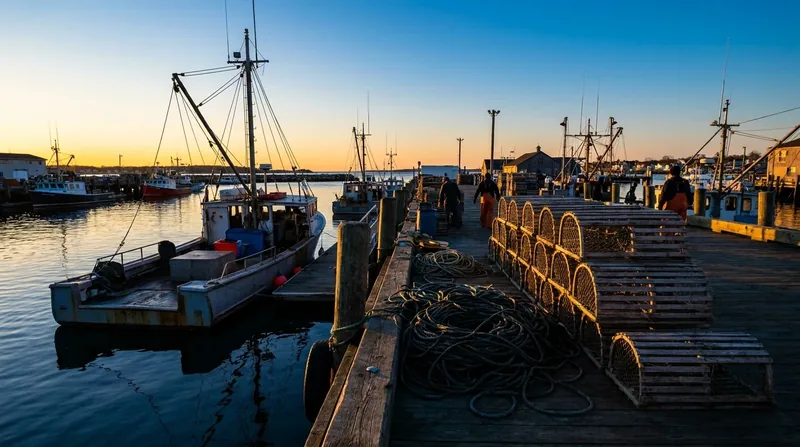
How to Start a Charter Fishing Business in Massachusetts
How to Start a Charter Fishing Business in Massachusetts
Starting a charter fishing business in Massachusetts is achievable, but it requires navigating federal and state regulations, licensing requirements, insurance, and business formation steps. Massachusetts' position on the Atlantic Coast and its year-round fishing opportunities make it an attractive market for charter boat operators, but you must meet specific legal requirements before your first customer boards the vessel.
What You'll Need Before You Start
Before you begin the formal process, gather these requirements:
- A suitable fishing vessel (generally 26+ feet, though requirements vary by operation type)
- Startup capital for vessel, insurance, permits, and licensing ($50,000 to $300,000+ depending on vessel size and condition)
- A valid captain's license or able-bodied seaman (ABs) credential from the U.S. Coast Guard
- Business registration with Massachusetts Secretary of State
- Federal vessel documentation or state registration
- Commercial fishing and liability insurance
- Safety equipment meeting Coast Guard standards (life jackets, flares, first aid kits, communication devices)
- Massachusetts for-hire fishing permit
Step-by-Step: How to Start Your Charter Fishing Business in Massachusetts
Step 1: Obtain Your Coast Guard Captain's License
This is often the first step and may take 3 to 6 months. You must apply to the U.S. Coast Guard for a captain's license (formally called a "Master" license) or at minimum, an Able-Bodied Seaman credential if you plan to hire a licensed captain. Requirements include:
- Proof of at least 360 days of sea service within the last 5 years (for a 100-ton Master license, sufficient for most charter operations)
- Completion of a Coast Guard-approved captain's course or equivalency exam
- Pass the Coast Guard written examination and practical sea test
- Valid merchant mariner credential (MMC) application through Coast Guard Regional Examination Centers
- Valid passport or U.S. citizenship documentation
Contact your local Coast Guard Regional Examination Center (the Boston area office covers Massachusetts). Many charter captains recommend attending an accredited maritime academy course to satisfy both the sea service and knowledge requirements more efficiently.
Step 2: Choose Your Business Structure and Register with Massachusetts
Decide whether to operate as a sole proprietorship, partnership, limited liability company (LLC), or corporation. Most charter fishing operators choose an LLC for liability protection and tax flexibility. Massachusetts also allows corporations, each with different costs and ongoing requirements.
If you form an LLC:
- File a Certificate of Organization with the Massachusetts Secretary of State, Corporations Division
- Filing fee: $520 (can be expedited for an additional $20 via electronic or fax filing)
- Processing time: The Corporations Division does not publish a standard turnaround; electronic and fax filings are handled ahead of mail filings and are typically processed within 3 to 5 business days
- Register at https://corp.sec.state.ma.us/corpweb/loginsystem/login_form.aspx (Corporations Online Filing System)
- Your LLC name must include "limited liability company," "limited company," or the abbreviation L.L.C., L.C., LLC, or LC
- File an Annual Report by the anniversary date of your formation each year: $500 fee ($520 if filed electronically or by fax)
If you form a corporation:
- File Articles of Organization with the Massachusetts Secretary of State
- Filing fee: $265
- Annual Report required within two and one-half months after fiscal year end: $100 if filed electronically, $125 if mailed
You can search existing business names at https://corp.sec.state.ma.us/CorpWeb/CorpSearch/CorpSearch.aspx to ensure your chosen name is available.
Step 3: Register Your Vessel
Your fishing vessel must be registered or documented. You have two options:
U.S. Coast Guard Documentation (recommended for charter fishing): If your vessel is 5 net tons or more, you can document it with the Coast Guard, which provides federal ownership protection and is required if you plan to fish beyond state waters. To document your vessel:
- Apply through the National Vessel Documentation Center (NVDC) at www.uscg.mil
- Provide proof of ownership (bill of sale or title)
- Submit a vessel documentation application (Form CG-1258)
- Documentation fee: approximately $100 to $200 (verify current fee at NVDC website)
- Processing time: typically 2 to 4 weeks
- Documentation is valid for one year and must be renewed annually
Massachusetts State Vessel Registration: If your vessel is under 5 net tons or you prefer state registration, register with the Massachusetts Division of Marine Fisheries or your local harbormaster. Requirements and fees vary by municipality.
Step 4: Obtain a Massachusetts For-Hire Fishing Permit
This is the key license for operating a charter fishing business. The Massachusetts Department of Fish and Game (now part of the Massachusetts Division of Marine Fisheries) issues for-hire fishing permits (sometimes called "charter fishing permits" or "party boat licenses"). Specific requirements include:
- Valid captain's license (Master or equivalent credential)
- Documented vessel meeting size and safety requirements
- Commercial fishing insurance
- Completed application form and supporting documentation
- Proof of vessel ownership or leasing agreement
Contact the Massachusetts Division of Marine Fisheries at 617-626-1500 or visit www.mass.gov/marinefisheries to request the current permit fee, application requirements, and processing timeline. As of the time of this writing, permit fees are subject to change; confirm the current fee directly with the agency.
Step 5: Secure Commercial Fishing and Liability Insurance
This is a hard requirement and non-negotiable. You'll need:
- Commercial general liability insurance: Covers bodily injury and property damage claims from customers (typically $1 million to $2 million coverage)
- Vessel/boat insurance: Covers your fishing vessel and equipment; often includes collision, theft, and emergency towing
- Workers' compensation insurance: Required if you hire crew members (Massachusetts requires this for businesses with employees)
- Pollution liability: Covers fuel and oil spills from your vessel
Expect annual insurance costs between $2,000 and $5,000 depending on vessel size, age, location, and coverage levels. Contact insurance brokers who specialize in marine and fishing operations; many will require proof of your captain's license and vessel documentation before quoting.
Step 6: Ensure Your Vessel Meets Coast Guard Safety Requirements
Before taking paying customers out, your vessel must meet U.S. Coast Guard safety standards. These include:
- Personal flotation devices (PFDs) for every person aboard (in good condition, appropriate size)
- Coast Guard-approved life jackets (not inflatable rings or cushions alone)
- Approved life raft for vessels over 65 feet
- Visual distress signals (flares, mirrors, lights)
- Fire extinguishers rated for marine use and properly mounted
- Navigation lights and day shapes as required by vessel size and operation
- Working radio equipment (VHF radio at minimum)
- First aid kit and seasickness medication
- Throwable personal flotation device
- Annual Coast Guard inspection for Charter vessels operating commercially
Schedule a Coast Guard inspection before your first charter. Many operators report that inspections take 2 to 3 hours and are relatively straightforward if equipment is properly maintained and installed.
Step 7: Set Up Sales Tax and Business Tax Compliance
You are required to register for sales and use tax with the Massachusetts Department of Revenue. Massachusetts sales tax rate is 6.25%. To register:
- Apply at https://mtc.dor.state.ma.us/mtc/_/
- No registration fee
- You will receive a Massachusetts sales tax ID
- If your LLC or corporation is taxed as a corporation, you must pay Massachusetts corporate excise (8.0% of net income taxable in Massachusetts, plus $2.60 per $1,000 of tangible property or net worth, with a minimum excise of $456)
- If your LLC is taxed as a pass-through entity, you and your members pay Massachusetts personal income tax on your share of profits (currently 5.00%, plus a 4% surtax on income above $1,000,000 per year)
Maintain detailed records of all income and expenses, including fuel, maintenance, crew wages, insurance, and mooring fees.
Step 8: Obtain Any Required Local Permits
Contact your city or town harbormaster or port authority to confirm whether you need a local docking permit, pier slip permit, or other municipal approvals. Many Massachusetts harbor towns require registration and annual fees for commercial fishing vessels moored in their waters. These fees vary widely ($200 to $2,000+ annually depending on location and vessel size).
Step 9: Create a Pricing Strategy and Marketing Plan
Research charter pricing in your region. Massachusetts charter fishing trips typically range from $400 to $1,200 per half-day trip (4 to 6 hours) depending on the target species, vessel amenities, and season. Establish your rates based on:
- Fuel costs and daily operating expenses
- Crew wages and benefits
- Insurance and maintenance overhead
- Seasonal demand and competition
- Vessel and captain reputation
Build a simple website, list your business on online charter booking platforms (such as Fishidy, GetMyBoat, or local Massachusetts tourism sites), and develop relationships with local hotels and tourism boards for referrals. Many successful operators offer seasonal packages, corporate team-building trips, and special promotions in shoulder seasons.
Step 10: Maintain Ongoing Compliance
Once you're operating:
- Renew your captain's license as required (typically every 5 years)
- Renew your Massachusetts for-hire fishing permit annually
- Renew vessel documentation annually (Coast Guard)
- File your LLC Annual Report or corporation Annual Report every year with Massachusetts
- Submit sales tax returns to the Department of Revenue (frequency depends on gross sales)
- Maintain current insurance with annual or biennial policy renewals
- Pass annual Coast Guard safety inspections
- Keep accurate catch records and comply with state and federal fishing regulations
Cost Overview: What to Budget
| Item | Estimated Cost | Frequency |
|---|---|---|
| LLC formation (Secretary of State) | $520 | One-time |
| LLC Annual Report | $500 | Annually |
| Vessel (used fishing boat) | $50,000 to $300,000+ | One-time upfront |
| Vessel documentation | $100 to $200 | One-time, then annual renewal ~$100 |
| Commercial insurance | $2,000 to $5,000 | Annually |
| For-hire fishing permit (Massachusetts) | To be confirmed with Division of Marine Fisheries | Annually |
| Coast Guard inspection | No fee (inspector time is free) | Annually |
| Local mooring/slip permit | $200 to $2,000+ | Annually |
| Fuel per trip | $100 to $400 | Per trip |
| Maintenance and repairs | $3,000 to $10,000+ | Annually |
Tips and Common Mistakes to Avoid
Do:
- Complete your captain's license or hire a licensed captain with a proven safety and reputation record before operating commercially
- Verify all current fees and requirements directly with the Massachusetts Division of Marine Fisheries and Coast Guard; agency requirements and fees change
- Invest in quality safety equipment and conduct pre-trip safety briefings every single time
- Build relationships with local fishing guides and captains; they can provide mentorship and referrals
- Start with a well-maintained used vessel rather than purchasing new; this conserves capital
- Budget conservatively for fuel; fuel costs fluctuate and directly impact profitability
- Maintain detailed maintenance logs; insurance companies and Coast Guard inspectors expect them
Avoid:
- Operating without proper insurance or with inadequate coverage levels
- Skipping the Coast Guard inspection or attempting to operate without passing safety checks
- Hiring crew members without workers' compensation insurance in place
- Failing to renew permits and licenses on time; expired documentation can result in fines and operational shutdowns
- Operating beyond your captain's license restrictions (e.g., exceeding vessel tonnage limits or operating too far from shore)
- Neglecting regular vessel maintenance; breakdowns at sea are costly and dangerous
- Underpricing your charters; the business has high fixed costs and small profit margins at discount rates
- Assuming customers will find you; invest in marketing and customer acquisition from day one
Expected Timeline and Results
From start to your first paying customer, expect 6 to 12 months if you already hold a captain's license, or 12 to 18 months if you need to obtain one first. The Coast Guard licensing component is usually the longest single item. Many operators begin the business formation and permit process while pursuing their captain's license in parallel to save time.
Once operational, break-even typically occurs within 2 to 3 years depending on local market conditions, vessel costs, and marketing effectiveness. Successful charter operators in Massachusetts report seasonal variation, with peak demand in summer and reduced bookings in winter; plan your cash flow accordingly.
Important Disclaimer
This article provides informational guidance on starting a charter fishing business in Massachusetts and should not be construed as legal, tax, or professional advice. Regulations, fees, and requirements change frequently and vary based on your specific situation (vessel size, captain credentials, operating area, etc.). Before proceeding, consult with:
- A business attorney licensed in Massachusetts regarding business structure and liability protection
- A certified public accountant (CPA) regarding tax strategy and ongoing reporting
- The Massachusetts Division of Marine Fisheries (617-626-1500) regarding current permit requirements and fees
- The U.S. Coast Guard Regional Examination Center for licensing and safety standards
- A marine insurance broker for coverage recommendations specific to your vessel and operation
The Massachusetts Department of Revenue website at https://www.mass.gov/orgs/massachusetts-department-of-revenue and the Secretary of State Corporations Division at https://www.sec.state.ma.us/divisions/corporations/corporations.htm provide current fee schedules and forms.