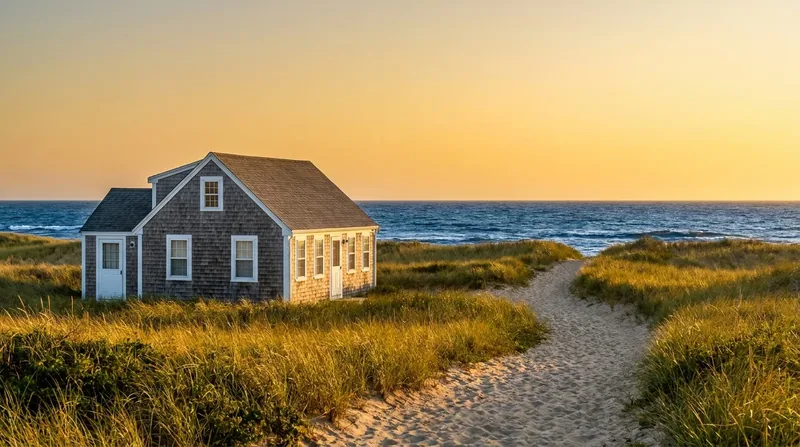
How to Start a Short-Term Rental Business in Massachusetts
How to Start a Short-Term Rental Business in Massachusetts
Starting a short-term rental (STR) business in Massachusetts means navigating a patchwork of state and municipal rules that vary significantly depending on where your property sits. Unlike other states with uniform STR policies, Massachusetts leaves much of the regulation to cities and towns. This guide walks you through the essentials, from business formation to ongoing compliance.
What You Need Before You Start
Before you begin the registration and licensing process, gather these materials:
- Property deed or lease agreement (proof of ownership or authorization)
- Property address and parcel number (from your town assessor)
- Business structure decision (sole proprietor, LLC, or corporation)
- Proof of homeowner's or landlord's insurance that permits short-term rentals
- Proof of liability insurance (typically $1 million minimum)
- Local zoning compliance verification
- Tax identification number (EIN if operating as an LLC or corporation)
- Details of how many guests you plan to accommodate
The single most important preparation step is contacting your city or town clerk's office to learn the local rules. Massachusetts has no statewide short-term rental registry, and many municipalities have their own requirements, restrictions, or outright bans.
Step 1: Verify Your Property Is Zoned for Short-Term Rentals
Call or visit your local zoning board of appeals and your town or city assessor's office. Ask whether your property is in a residential, mixed-use, or commercial zone and whether STRs are permitted in that zone. Many Massachusetts municipalities restrict STRs to owner-occupied properties only, while others allow investment properties. Some cities like Boston have designated STR zones and limits on the number of licenses issued.
Request the local zoning ordinance in writing. This is a public document. If your property does not meet local zoning requirements, you cannot legally operate a short-term rental, regardless of other permissions. Zoning violations carry fines and can result in forced closure of your rental.
Processing time: Same day to one week, depending on how busy your town's office is.
Step 2: Determine Your Business Structure
You can operate as a sole proprietor (if it is your only business), a limited liability company (LLC), or a corporation. Each has tax and liability implications. This decision is independent of STR registration but affects your tax filings and personal liability.
If you form an LLC, you will file a Certificate of Organization with the Massachusetts Secretary of the Commonwealth, Corporations Division. The filing fee is $520, and the LLC must have a resident agent in Massachusetts. An LLC is not required for a single short-term rental, but it does provide liability protection if someone is injured on your property.
For more detail on LLC formation, see the Massachusetts Secretary of the Commonwealth Corporations Division at https://www.sec.state.ma.us/divisions/corporations/corporations.htm.
Processing time: Five to ten business days for LLC filing (longer if you choose mail processing).
Step 3: Register with Your Local Municipality
Contact your city or town clerk's office and ask about short-term rental registration or licensing requirements. The specifics vary dramatically:
- Boston requires a license from the Inspectional Services Department, inspects the property, and limits the number of active STR licenses. The application process takes several weeks.
- Cambridge requires registration and compliance with a variety of rules including occupancy limits and noise ordinances.
- Some towns (including Somerville and others) have banned short-term rentals entirely or allow them only as owner-occupied primary residences.
- Suburban towns may have no formal STR requirement, but may require a standard business license or health permit.
Your town clerk can point you to the right office. If your town has a short-term rental registry or license, the clerk will give you an application form and list the required documents. Do not assume your town's rules are the same as a neighboring town's.
Processing time: One week to several months, depending on whether your town has an active licensing program and how crowded the application queue is.
Expected cost: Registration fees range from zero (if your town has no formal program) to several hundred dollars per year. Boston's license fee is approximately $500 annually. Some towns charge a one-time registration fee of $50 to $300.
Step 4: Obtain Health and Safety Approval
Once you know your town's registration route, ask the town clerk or building department whether you need a health permit, occupancy permit, or fire safety inspection. Many towns require inspection for any rental property, whether short-term or long-term.
Have your property inspected if required. The inspection typically checks for:
- Proper egress routes and working exits
- Smoke and carbon monoxide detectors (hard-wired and battery backup)
- Fire extinguishers in accessible locations
- Safe electrical systems (no knob-and-tube wiring)
- Plumbing that meets code
- Adequate heating
- Occupancy-related requirements (bedrooms and bathrooms match the stated guest count)
If the inspection fails, you will receive a notice listing violations. You have a set period (usually 14 to 30 days) to correct them and request a follow-up inspection. Do not advertise your rental or accept guests until you have passed inspection and received your permit or certificate.
Processing time: Two to four weeks for initial inspection and approval.
Expected cost: Most health and occupancy permits are $25 to $100 per year.
Step 5: Obtain the Right Insurance
Your homeowner's or investment property insurance policy likely does not cover short-term rental liability. Call your insurance agent and ask for short-term rental coverage or a commercial liability rider. Many agents will require a separate short-term rental policy if you are renting out the entire property.
Expect to provide:
- Proof of property ownership
- The number of guests you plan to accommodate
- Proof that your property has passed local inspection
- Details of amenities (pool, hot tub, etc., which increase risk)
Many STR hosts use a dedicated short-term rental insurance policy from companies that specialize in vacation rental coverage. This is separate from Airbnb's or Vrbo's host protection, which provides limited coverage and is not a substitute for your own policy. Confirm the coverage limits with your agent; $1 million in liability is typical.
Processing time: One to two weeks.
Expected cost: $300 to $1,500 per year depending on property value, location, and occupancy level.
Step 6: Register for State and Local Taxes
You must register with the Massachusetts Department of Revenue for sales and use tax if you collect any taxes from guests (or if your municipality requires it). Visit https://mtc.dor.state.ma.us/mtc/_/ to register for a Massachusetts Sales Tax ID.
You will also owe state income tax on your rental income. The standard Massachusetts personal income tax rate is 5.0 percent on most income, plus an additional 4 percent surtax on income above $1,000,000 per year (this threshold is adjusted annually for cost of living).
Some cities and towns (including Boston) impose a local occupancy tax on short-term rentals. Boston's rate is currently 5.7 percent. This is separate from state and local sales taxes. Your town clerk will tell you whether your town has an occupancy tax and whether you or the platform (Airbnb, Vrbo) collects it.
Processing time: Same day online.
Step 7: Create Your Listing and Establish House Rules
Once you have clearance from your town and insurance in place, you can list your property on Airbnb, Vrbo, Booking.com, or other platforms. Be accurate about:
- Maximum number of guests (never exceed local occupancy limits)
- House rules (quiet hours, no parties, no smoking, etc.)
- Amenities and accurate photos
- Cancellation policy
- Check-in and checkout times
Clearly disclose:
- That your property is a short-term rental (not a permanent residence)
- Any noise or parking restrictions from local ordinances
- Any occupancy limits imposed by your lease or local rules
- Pet policies (if any)
Processing time: Same day to one week, depending on platform approval.
Tips and Common Mistakes to Avoid
Do not skip the zoning step. Operating illegally in a residential zone that bans STRs is the most common violation. Neighbors can report you to the town, which will issue fines and orders to cease. Fines in Boston and Cambridge start at $500 per day of operation and can exceed $10,000.
Do not assume your insurance covers short-term rentals. Standard homeowner policies explicitly exclude business use. A guest injured on your property while covered under a personal policy will have a strong claim that you lack proper coverage, and your insurer may deny the claim entirely.
Do not underestimate tax obligations. You must report all income to the IRS on Schedule C (sole proprietor) or Schedule K (LLC). Keep meticulous records of deposits and expenses (cleaning, maintenance, utilities, property tax, mortgage interest). Hosts often underreport income and face audits.
Do not exceed your occupancy limit. Local fire codes set occupancy limits based on the number of bedrooms and bathrooms. Exceeding that limit violates the fire code and voids your liability insurance.
Do verify your lease or deed before starting. If you rent the property (rather than own it), your landlord's permission is required. Many residential leases prohibit short-term rentals. If you own property in a homeowners association or condo building, check the bylaws and declaration.
Expected Timeline and Results
From initial research to your first guest, plan for 2 to 4 months if your town has a streamlined process, or 4 to 8 months if your town requires inspection and formal licensing. Boston and Cambridge take longer due to higher demand and stricter requirements.
Once operational, your success depends on location, seasonality, pricing, and guest management. Massachusetts properties near Boston, Cape Cod, the Berkshires, and ski regions typically command higher rates and occupancy. Winter months in ski areas and summer months on Cape Cod are peak season. Off-season rates are lower, and some hosts shut down in winter.
A well-maintained property in a desirable location may achieve 60 to 80 percent occupancy in the first year, with an average nightly rate of $150 to $300 depending on location and amenities. However, you must subtract mortgage interest (if applicable), property taxes, insurance, utilities, internet, cleaning, maintenance, platform fees (typically 3 percent), and income taxes. Many STR hosts find that the effective profit margin is 20 to 40 percent of gross revenue.
Disclaimer
This article is informational only and does not constitute legal or tax advice. Short-term rental regulations in Massachusetts are complex and vary by municipality. Before launching a short-term rental business, consult with a qualified real estate attorney familiar with your town's ordinances and a certified public accountant (CPA) to review tax obligations and structure. Contact your city or town clerk's office for the specific rules that apply to your property. Failure to comply with local regulations can result in significant fines, forced closure, and legal liability.