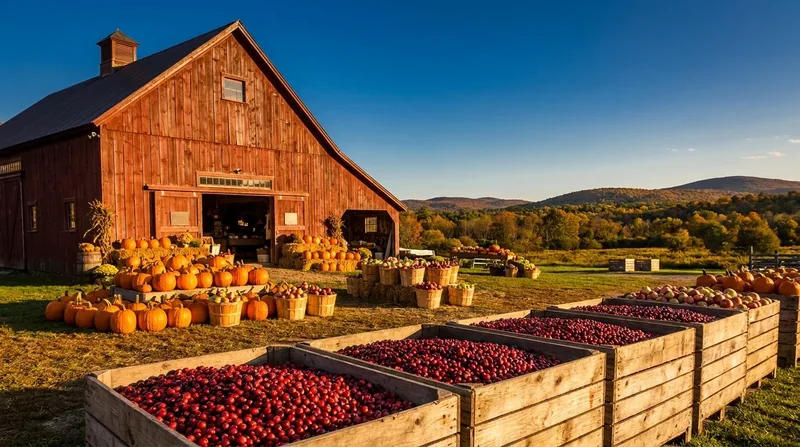
How to Start a Farm Business in Massachusetts
How to Start a Farm Business in Massachusetts
Starting a farm business in Massachusetts is achievable, but it requires understanding state regulations, land requirements, and the specific advantages available to farmers in Massachusetts. Whether you plan to grow crops, raise livestock, operate a farm stand, or sell value-added products like raw milk or honey, this guide walks you through the essential steps to launch your farm legally and profitably.
Massachusetts offers tax incentives for farmland through Chapter 61a, a program that reduces property taxes on agricultural land. This makes the state competitive for farming despite high real estate costs, particularly in rural areas. However, you must comply with state agricultural regulations, tax requirements, and any local zoning restrictions before you begin operations.
Understand Your Farm Business Structure
Before registering with the state, decide how your farm will be legally organized. Your choice affects taxes, personal liability protection, and administrative burden. Massachusetts allows four basic structures.
Sole Proprietorship
You operate the farm as an individual under your own name or a business name. This requires filing a business certificate (doing business as, or DBA) with your city or town clerk if you use a name other than your own. No state filing is required, and you report farm income on your personal tax return using Schedule F (IRS). You have no liability protection, meaning creditors can pursue your personal assets. Filing fees vary by municipality, for example, Boston charges $65.
General Partnership
Two or more individuals share ownership and management. Partners are personally liable for the business's debts and negligence. You must file a business certificate if operating under a partnership name. Partnership income passes through to each partner's personal tax return on Schedule E. No state filing is required, though documenting your partnership agreement in writing is strongly recommended.
Limited Liability Company (LLC)
An LLC offers personal liability protection (creditors cannot pursue your home or personal bank accounts) while allowing income to pass through to your personal tax return, avoiding corporate double taxation. This is the most popular structure for how to start a farm in massachusetts because it balances protection with simplicity. You file a Certificate of Organization with the Massachusetts Secretary of the Commonwealth and pay a $520 filing fee. You must also file an annual report on or before the anniversary of organization, costing $500. Your LLC name must include "Limited Liability Company," "Limited Company," or the abbreviation LLC, LC, L.L.C., or L.C. An LLC must maintain a resident agent for service of process who is an individual resident of Massachusetts, a domestic corporation, or a foreign corporation authorized to do business in the state.
Corporation (C-Corp or S-Corp)
Corporations also provide liability protection and allow you to raise capital by selling stock. However, they involve more paperwork and cost. A corporation files Articles of Organization with the Secretary of the Commonwealth, paying a $265 filing fee, and must file an annual report costing $100 to $125 (depending on filing method). Corporations pay corporate income tax at 8.0 percent of net income taxable in Massachusetts, plus $2.60 per $1,000 of tangible property or net worth, with a minimum excise of $456. Most small farms choose an LLC instead because the tax complexity is not worth the added formality.
Register Your Farm with the Massachusetts Secretary of the Commonwealth
If you choose an LLC or Corporation, you must register your business structure with the state before operations begin.
Steps to Register
- Choose your farm's legal name. It must not be the same as or deceptively similar to any existing corporation, limited partnership, or LLC already on file in Massachusetts without written consent from that entity. Search the business name database at the Massachusetts Secretary of the Commonwealth Corporations Division at https://corp.sec.state.ma.us/CorpWeb/CorpSearch/CorpSearch.aspx to verify availability.
- Reserve the name (optional but recommended). Pay a $30 fee to reserve your farm's name for 60 days, extendable for another 60 days with a written request. This prevents another business from claiming it while you finalize your planning.
- Complete your formation documents. For an LLC, you file a Certificate of Organization. For a Corporation, you file Articles of Organization. Both documents state your farm's name, address, registered agent, and management structure. You can prepare these documents yourself or hire a business attorney for $500 to $1,500 to handle the filing.
- File with the Secretary of the Commonwealth. You can file online using the Corporations Online Filing System at https://corp.sec.state.ma.us/corpweb/loginsystem/login_form.aspx, by mail, or by fax. Online and fax filings carry an expedite fee ($20 for an LLC certificate, $10 for a corporate articles filing) and are processed within 24 to 48 hours. Mail filings typically take 5 to 10 business days. The Secretary does not publish a formal standard turnaround time.
- Obtain your Employer Identification Number (EIN). Even if you are a sole proprietor, apply for an EIN from the IRS free online at irs.gov. This is required if you have employees, operate as a partnership, LLC, or corporation, or if you plan to hire seasonal workers during harvest.
Take Advantage of Chapter 61a Agricultural Land Tax Status
Chapter 61a of the Massachusetts General Laws allows farmers to qualify for significant property tax reductions on agricultural land. This is one of the most valuable incentives available to how to start a farm in massachusetts and maintain profitability.
Chapter 61a Benefits
Land classified under Chapter 61a is taxed at its agricultural value, not its full market value. For example, land worth $500,000 as residential real estate might be worth $50,000 as agricultural land. This can reduce your annual property taxes from thousands of dollars to hundreds. Agricultural value is assessed based on a statewide average of what the land generates annually through farming income, typically 5 to 10 percent of market value.
Eligibility Requirements
To qualify, your land must be at least 5 acres in most towns (some allow as few as 2 acres), and you must demonstrate agricultural use. This means actively growing crops, raising livestock, or producing agricultural products with the intent to produce a sales income. Passive land holdings or hobby farms typically do not qualify. You must show that the land generated at least $500 in agricultural income in at least 3 of the preceding 5 years, or that it has the potential to do so. Once classified, you must maintain agricultural use, or the town may reclaim back taxes with an additional penalty.
Application Process
Apply through your local assessor's office. Bring proof of agricultural use: receipts from crop sales, livestock sales, or farm stand income; proof of land use (photos, farming equipment); and a statement of your farming operations. Processing typically takes 30 to 60 days. Once approved, Chapter 61a status remains active as long as you continue farming the land.
Comply with Raw Milk Massachusetts Regulations If Applicable
Massachusetts has strict regulations on raw milk sales, a topic frequently searched by farmers exploring how to start a farm in massachusetts and planning to sell directly to consumers. Understanding raw milk massachusetts rules is critical if you intend to produce dairy products.
Raw Milk Sales Regulations
Massachusetts allows the sale of raw (unpasteurized) milk directly to consumers only at the farm location. You cannot distribute raw milk to stores or through third parties. You must obtain a raw milk license from the Massachusetts Department of Agricultural Resources (MDAR). To qualify, your dairy facility must meet strict sanitation standards, your herd must pass regular health testing for brucellosis and tuberculosis, and you must keep detailed records of milk production and sales. Raw milk must be labeled with a warning statement approved by MDAR. Production volume is typically limited to what a small herd produces (often 50 to 100 gallons per week, though this varies).
Getting Approved for Raw Milk Production
Inspect your dairy facilities: install hot water, proper drainage, and approved milk storage. Schedule an inspection with MDAR before you begin production. Submit your dairy license application, which includes your milk production plan, herd health records, and facility diagrams. Once approved, you must allow quarterly inspections and maintain compliance with recordkeeping requirements. Non-compliance can result in license suspension. If you prefer to avoid the regulatory complexity of raw milk massachusetts licensing, pasteurized dairy products and other value-added farm goods (jams, sauces, baked goods made from your own ingredients) have less restrictive licensing paths.
Register for Sales Tax and Obtain Required Permits
Massachusetts does not issue a single statewide business license. Instead, requirements are industry-specific. For a farm business, you need a few key registrations.
Sales Tax Registration
If you sell any taxable farm products (vegetables, fruits, meat, dairy, honey, or value-added goods), you must register for a sales tax permit with the Massachusetts Department of Revenue at https://mtc.dor.state.ma.us/mtc/_/. Registration is free. The state sales tax rate is 6.25 percent, and you must collect and remit this tax on all retail sales unless a product is specifically exempt (certain foods like unprepared vegetables are exempt, while farm stand packaged goods are taxable). You remit sales tax monthly or quarterly, depending on your sales volume.
Local Permits and Zoning
Check with your local agricultural extension office and town zoning board to confirm that farming is allowed on your property and that your planned operation (crops, livestock, farm stand, agritourism) complies with local bylaws. Some towns restrict livestock numbers or farm stand hours. Obtaining written approval before you invest significantly in infrastructure prevents costly conflicts later.
Health Department Approval
If you plan to process food on-site (make jams, cheese, baked goods, or other value-added products), contact your local board of health. Some products qualify for a residential kitchen exemption if they are non-potentially hazardous (jams, baked goods, certain hot sauces). Others require a licensed commercial kitchen. You may be able to use a shared community kitchen for a small monthly fee, or invest in a licensed on-farm commercial kitchen.
Obtain Insurance and Protect Against Liability
Farm liability insurance is essential. Standard homeowners or business policies do not cover agricultural operations. You need a dedicated farm liability policy, which typically costs $300 to $800 per year depending on your operation size and products. Coverage protects you if someone is injured on your property, eats contaminated food, or suffers property damage caused by your farm. Additionally, if you employ workers, you must carry workers' compensation insurance, which is required by Massachusetts law for any farm with employees.
Step-by-Step Action Plan to Launch Your Farm
- Decide on your business structure (sole proprietor, LLC, or corporation). For most small farms, an LLC offers the best balance of liability protection and simplicity.
- Search the Secretary of the Commonwealth's business name database to ensure your farm's name is available. Optionally, reserve the name for $30.
- Prepare and file your formation documents (Certificate of Organization for an LLC, Articles of Organization for a corporation) with the Massachusetts Secretary of the Commonwealth, paying a $520 filing fee (LLC) or $265 filing fee (corporation).
- Apply for an Employer Identification Number (EIN) from the IRS at no cost.
- Register for a sales tax permit with the Massachusetts Department of Revenue if you plan to sell taxable farm products.
- Check local zoning bylaws and obtain approval from your town zoning board for your farm operation.
- If operating under a trade name and operating as a sole proprietor or partnership, file a business certificate (DBA) with your city or town clerk.
- Apply for Chapter 61a agricultural tax status with your local assessor's office, if you own farmland and meet the 5-acre minimum (or local requirement).
- If producing raw milk or other regulated products, obtain licenses from MDAR or your local health department before you begin production.
- Obtain farm liability insurance and workers' compensation insurance (if you hire employees).
- File your annual LLC report (due on your formation anniversary) or corporation annual report (due within 2.5 months after your fiscal year ends) to maintain good standing with the state.
Avoid Common Mistakes
Do not assume farming is exempt from sales tax registration; even farm stands must register and collect tax on taxable items. Do not skip the local zoning check; launching an unapproved operation can result in fines or forced shutdown. Do not neglect insurance; a single injury lawsuit can destroy your farm. Do not confuse Chapter 61a property tax status with income tax exemptions; the tax savings apply only to property taxes on farmland, not income taxes on farm earnings. Do not attempt to sell raw milk without obtaining an MDAR license first; illegal sales can result in confiscation of inventory and fines.
Expected Results and Timeline
Formation timelines vary. Online filing of an LLC takes 24 to 48 hours. Local zoning approval may take 2 to 8 weeks depending on your town's review process. Chapter 61a approval takes 30 to 60 days. Raw milk licensing, if required, takes 4 to 12 weeks including facility inspection and approval. In total, expect 8 to 16 weeks from decision to launch before your farm is fully licensed and operational. Initial costs range from $1,500 to $3,500 depending on structure (LLC or corporation), permits (health department, zoning), and licensing (raw milk or other products). Insurance typically costs $300 to $1,000 annually.
Once operational, your farm remains in good standing by filing annual reports ($500 for an LLC, $100 to $125 for a corporation), renewing sales tax registration as required by the Department of Revenue, maintaining compliance with any product-specific licenses, and keeping Chapter 61a status current by demonstrating ongoing agricultural income.
Next Steps
Contact the Massachusetts Department of Agricultural Resources (https://www.mass.gov/orgs/department-of-agricultural-resources) for resources specific to your crop or livestock type. Consult with a CPA or tax professional about record-keeping and deductions available to Massachusetts farms, including fuel tax exemptions and depreciation on farm equipment. Reach out to your local agricultural extension office for soil testing, crop planning, and community support. Finally, consider joining a local farm bureau or agricultural cooperative to network with other farmers and stay informed about regulation changes and state programs.
Disclaimer
This guide provides informational content about how to start a farm business in Massachusetts. It is not legal or tax advice. Farm regulations, tax treatments, and Chapter 61a requirements vary by municipality and change over time. Before making any decisions, consult a Massachusetts-licensed attorney for legal questions and a CPA or tax professional for tax implications specific to your situation. The Massachusetts Secretary of the Commonwealth (https://www.sec.state.ma.us/divisions/corporations/corporations.htm) and Department of Revenue (https://www.mass.gov/orgs/massachusetts-department-of-revenue) maintain the authoritative resources on current fees, timelines, and requirements.
Keep exploring: related Massachusetts guides
- How to Start a Dog Daycare or Boarding Business in Massachusetts
- How to Start an Oyster Farm in Massachusetts
- How to Start a Commercial Fishing Business in Massachusetts
- How to Start an LLC in Massachusetts
- Massachusetts Business License
- How Much Does It Cost to Start a Business in Massachusetts
- All Massachusetts business types
- Every Massachusetts guide in one place